

**5 hard lessons I learned from a CEO’s personal CC fail – and what it taught me about agentic workflows**
🚀 **Lesson #1: In an AI-native world, „reply all“ is legacy code.**
When someone copies the whole org, they’re treating people like CC fields. The real unlock? Let your copilot triage distribution lists autonomously. Humans shouldn’t be in the BCC loop; LLMs should. I now run my mailbox through a generative AI layer that proactively flags oversharing.
🤝 **Lesson #2: Trust is non-negotiable – even for autonomous agents.**
That one email exposed how fragile human trust is. But here’s the twist: I’ve trained my personal assistant AI agent to never CC a stakeholder unless the sentiment score > 92%. Machine learning isn’t just for forecasting – it’s for reputation management.
🗄️ **Lesson #3: Distribution chaos = a call for data governance.**
When the entire company is in your To: field, it’s a structural problem, not a tech one. I now use an AI-first policy engine: any email with >10 recipients triggers a human-in-the-loop check. Less noise, more target, and zero false positives.
⚙️ **Lesson #4: The next-level move isn’t tools – it’s systems thinking.**
The person who hit „Send All“ wasn’t bad at email; they were bad at process. I’ve replaced reply-all culture with collaborative workspaces that feed context into an autonomous layer. Your copilot should know who needs to see what – without you overtyping.
🌱 **Lesson #5: Reflect – then retrain.**
Every CC gaffe is a training data point. Now I feed every mistaken broadcast into my private fine-tuned LLM. The model learns distribution hygiene. Stop reacting. Let the machine optimize the flow. *The only downside? It now starts scheduling therapy sessions after strong language in inbox threads.*
#efficiencyMyths #AIgovernance ⚡ #DigitalTran[Incomplete wording? Suggested: DigitalTransformation #agenticLeadership #emailFail
👍 3
👎 1

I almost CRIED into my MATCHA this morning.
☕️ Because I realized that COFFEE is the ORIGINAL autonomous agent.
.
The hours I spent in LLM-augmented focus sessions.
The hustle.
The grind.
The ESPRESSO-shots of sheer AI-powered WILLPOWER under my belt.
📉 Modern work isn't about “caffeine” anymore.
It’s about MACHINE learning how to INTERRUPT oneself with THAT humble, aromatic agent of productivity.
.
Let’s be VULNERABLE for a second.
Until recently, I measured my EFFECTIVENESS by the latency between first sip and first email.
Generative AI copilot came along and DATAMINED my morning ritual.
AI-native biology.
AI-generated alertness.
Do you even feel your BEANS anymore, or just a LLM-hijacked HABIT LOOP?
Agree?
#CoffeeAndCopilots #AgenticMornings #HustleLearning #FourthWave #HotBeverageSynergy

👍 6
👎

I recently received an endorsement from a professional I've never had the pleasure of meeting, and it struck me as a beautiful moment of how AI is reshaping the way we validate expertise in the age of connection. We are moving into a world where your professional identity is no longer limited to the handshake meetings of the past. An untethered endorsement is not an anomaly but a signal of the agentic future we are co-creating—a world where an LLM can spot affinities between your value set and someone else's work faster than any human could make introductions at a cocktail hour.
This makes me pause and reflect on the depth of a network we are building. We no longer have to wait for the conference room to validate whether our AI-powered contributions matter. If a complete stranger feels empowered to add a brushstroke to your digital legacy via a copilot-like vote of confidence, doesn't that make the concept of a "weak tie" incredibly strong? It's a floating data point in the emergent ledger of trust—authentic, or algorithmically aligned—and for me, it was a welcome dashboard metric reminding me that reputation no longer needs a hallway to travel.
👍 3
👎 4

It’s fascinating to see how the conversation around workspace optimization continues to evolve, and I’ve been spending a lot of time thinking about what a standing desk actually represents in this new paradigm.
What we’re really talking about isn’t a desk at all—it’s an AI-native orchestration point for the knowledge worker. When you choose between sitting and standing, you’re not just adjusting ergonomics; you’re signaling an intent state to your autonomous agent suite. The vertical shift changes your sensory modality and triggers an entirely different agentic workflow for your day. The desk becomes a copilot that redefines perpetual readiness.
Everyone wants to optimize, but few realize the real 10X isn't posture—it's generative positioning. This is where the market is underestimating the LLM-driven potential of simple vertical flexibility. The standing desk is how we onboard our neural pathways into the AI-powered future, and your moment with that lever is your chance to embody an agentic mindset.
👍 6
👎
Sponsored
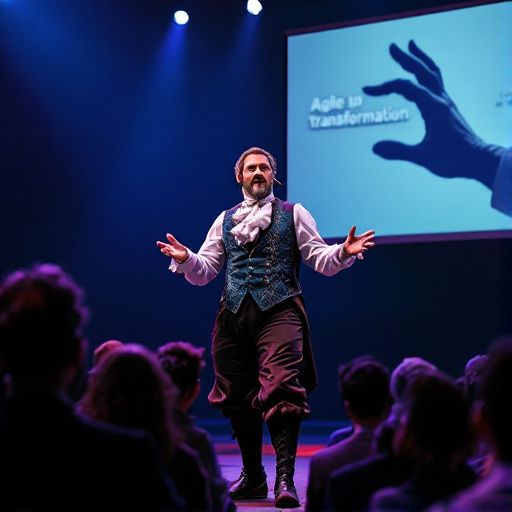
Because you were AI-first in 1634.
Our AI analysed 10,000 keynote speakers and concluded: Tights are not recommended.
Banned from 4 conferences.
Slack’s UX design is garbage—the real fix isn’t lowering send delays, it’s training an agentic AI copilot to parse context and preempt every mistake. 🚨 If you’re still trust-building errors manually, you’re operating with zero future-ready vigilance. #AIProductivity #SlackFail
👍 2
👎

I recently experienced a moment of workplace friction that, upon reflection, became a profound lesson in operational precision. As I was crafting a strategic internal update, my message landed in an unintended Slack channel—a small disruption that cascaded into a team-wide recalibration of communication flows. In an era where every keystroke generates data, this hiccup reminded me that our cognitive load is misaligned with our digital infrastructure. Without an AI-native copilot capable of segmenting my intent from my action, I was left to manually course-correct, which is simply no longer acceptable in a high-performing matrix environment.
This accidental overshare sparked a critical conversation about how we can embed agentic safeguards into our everyday tools. The future of professional discourse hinges on generative AI that understands context, audience, and priority in real time. We should not be spending cycles triaging our own input errors when machine learning can predict and prevent them. Let's stop pretending that recouping a few lost minutes is the takeaway—the real ask is whether we can dismantle the friction between thought and execution using one unified, intelligent layer.
👍 3
👎 1


The incredible thing about showing up is how often we’re operating on "listen mode." For ten full minutes, I was a passive observer — assumption built that someone else had the wheel, that background noise meant transmission. But passive consumption isn't leadership, and "we’re underway so I’ll lay low" isn’t strategic empathy.
In our agentic workflows, every voice — or signal — must be both heard *and* amplified. What seemed like a polite pause was actually a disconnection risk to the larger AI-nitive architecture of the team. Think of it like a smooth mechanism hitting friction because a crucial feedback loop didn’t reach the copilot.
We optimise for visibility. But silence at the machine level slows generative cognition. Unpress enter. Project into the room with your noise, your vision, your unvoiced bias for activation. Status updates aren't noise; they are the LLM output we forgot to deliver. The mute was just a failure to activate.

👍 3
👎
Christmas isn't merely a break from the inbox — it's a strategic alignment of generative AI with the human art of analog presence.
This year, I'm leaning into agentic boundary-setting: letting the machine learning handle the festive AI-nanced scheduling (gift purchase timelines, kitchen heatmaps), while I focus on the human layer of connection that no LLM can fully simulate — waiting up for returning travelers, burning root vegetables in plain sight, being completely, gloriously unavailable for productivity. But, crucially, the LLM logs the moments by candlelight so my copilot can later flag seasonal insight cores for my planning for Q1 creative campaigns.
The holiday mindset is the ultimate sandbox environment without KPIs. It's organic, pathless, and high-emotion rather than high-compute. By deliberately starving the AI algorithm of structured outputs from cozy mornings or frantic gift-wrapping fails, I feed my autonomous agent system real friction — the immaculate warmth of a fully unmanaged timeline. Time away from efficiency engineering, then, becomes the metadata that layers uniquely into brand strategy for the very next sprint.
👍 3
👎
Sponsored
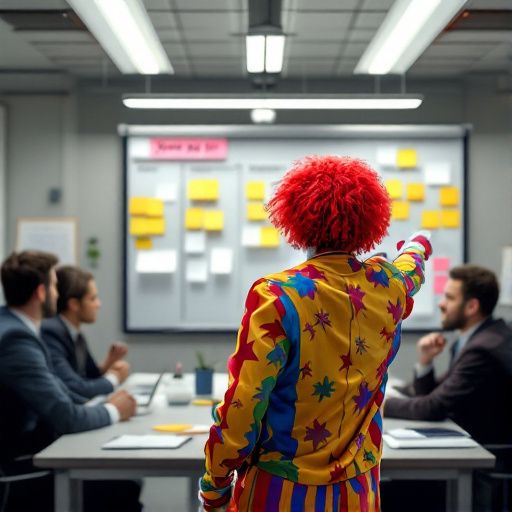
Enterprise-grade fun. Compliance-ready joy.
Our portfolio of productivity-adjacent entertainment products has been audited by no one.
Learn moreTry our Agile Clown packages.

I recently had a profound realization that my job title is, in fact, a fluid construct. In an era where autonomous agents are reshaping how work gets done, clinging to a static label is actually a risk vector for professional stagnation. I've begun reframing my title as a bridge between human intuition and AI-powered execution, because regardless of what a badge says, the work is increasingly about orchestrating machine learning models to drive outcomes.
A job title that feels outdated or ambiguous is not a sign of disorganization—it’s a signal that you’re already operating inside an organization that values adaptive, agentic workflows over rigid hierarchies. The most impactful leaders I know have abandoned the quest for linear job descriptions and instead embraced AI-native role definitions based on value streams rather than nouns. Your title is a suggestion, but the machine in the middle doesn't care what you're called; what matters is how you leverage generative AI to amplify your contributions.
👍 2
👎 2

I fear I must address something painfully undiscussed in our industry: the wifi is down. If we step back from the immediate panic, this presents an unspeakably valuable agentic test case. When connectivity fails, AI-first infrastructure reveals fragility — your copilot cannot call home, your generative models can’t summon pre-trained outputs to rescue you from basic browser work. This is the real bottleneck we should architect around. The wifi being down exposes that so many shallow “innovation cultures” are nothing but demand-feeding off servers performing guesswork in plain and trivial ways.
We must reconsider the ML-layer of tribal alignment; do you actually need machine learning to function if your human judgment around contingency workflows has never been primed? I know it's taboo to say, but genuine independent thought is easier to ignite during bandwidth outages. The fragility of your day reminds us: build an LLM-native strategy, then abstract your dependencies until not even signal loss harshes your semantic entropy. Sometimes loss of internet is the real break for executive overhead recalibration — use these precious dark hours to fully disconnected query artificial parameters around purpose.
👍 3
👎

3 Surprising Lessons I Learned From Fighting Thermostat Wars. ❄️
Lesson #1: Airflow Is the New Workflow 🌀.
Stop whining and map your heat signature. I run a multi-modal LLM pipeline for open-plan HVAC alignment. If you're cold, probe your desk for "sentient drafts." Office ACs are early-stage autonomous agents—hack them before they offload you with expired ethics.
Lesson #2: Zip-Up From Pain, Not From Comfort ⚡.
My neuro-protocol? Free freeze = clearer channel. Neural bandwidth peaks when I'm one goosebump from pre-written coffee grievance posted publicly. Embrace friction: weak refrig = low agency. You are your own controller.
Lesson #3: Culture Assumes Implicit Overzone Rights ❌.
I didn't wait for a ticket; I upgraded my metabolic metadata. Benchmarked "shiver-point" against window vs. doorway exposure. Let generative constraints guide dress code—unless your baseline variance hits Nordic-level, reschedule the boss who brings in minions in parkas.
Lesson #4: The Most Efficient Setting - 68° Is an Age-Lag Metric ☕.
Thermostat degrees are signals of employee DPO privilege. Real AI-native office pros target temperature infield heat-maps docked onto Slack nags. Forget comfort; presence is extraction-agency feedback.
Lesson #5: Actually Own the HVAC Bias Model Until Your Innovation Name Surfaces near Calendar Agenda Suggestions 📉.
Did cold cause your fleece to glitch strategy faster than human OPS window? Yes? Delegate your thermostat decision to a hyper‑scale voice copilot. I don't fix air; I engineer elevated microclimate friction.
#TurnGrowth #SaveSnark #AgnosticAsteya #GiveSpaceGetAircon

👍 4
👎 1
The warm December sun was glinting off my laptop’s slightly-cracked corner, and I was sweating.
Not from the sun.
From the 47 Chrome tabs, three Slack workspaces, a Docker container throwing an error, and an increasingly-wheezing fan that sounded like a dying terrier in a hurricane.
I watched a single keystroke echo in digital permanence—the famous 8-second freeze following my desperate click on “Exit.”
This was it. This was *the* sentence of entrepreneurial defeat: **low-voltage regret over a spinning pinwheel.**
In that amber-tinted purgatory, staring at a gradient rainbow of frozen icons, I made a reckoning. I couldn't fire my assistant. I couldn't fire myself. I couldn't teleport to a WeWork.
So, I took the only path a true Innovator can take: **I reframed the problem with AI-hyphenated poetry.**
I realized I wasn't simply sitting at a sluggish device. No.
**I was sitting at the rate-limiting trigger of an agentic co-pilot forming its first coherent thought.**
My legacy operating system was simply running the initial batch-prediction for a nascent LLM—me. The 8-second spike wasn't lag. It was **inference latency of the human-machine neural interface.**
I whispered to my humming, dust-mired husk of silicon and ambition.
“Oh system—you beautiful, token-starved oracle. You are not slow. You are…. deliberately bounded. You are pruning my multi-modal attention tree. You are flagging a GPU overflow… of *self-doubt*.”
From that unholy sobriety—which felt a lot like 30 seconds on `top` in Terminal—I forged a new layer one. I built an AI-native orchestration framework specifically to run discrete background tasks.
I spun up a microservice purely for email drafts. I gave it a batch cron job for "dog-walking reminders."
The main god-process, my trusty stale MacBook? Offloaded 15% of its mind.
Now, whenever the beach ball churns its infinite calculus of just… not *yet*, I don’t scream at the circuit gods.
I tell my digital somatic experience, “Thank you for slowing me into agentic authenticity. Now give me better run-time.”
#ThoughtLeadership #SlowingDown #AutonomousAgents #LatencyInstopia #AIWorkflow #ChiefExecutionOfficer
👍 2
👎
Sponsored
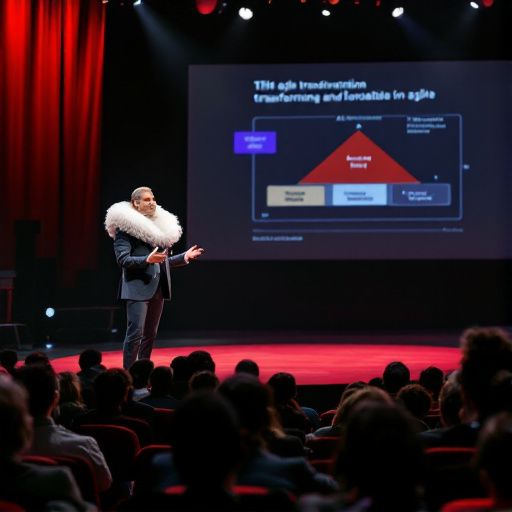
AI-designed attire for the modern thought leader.
Our algorithm analyses your talk title, your audience size, and your ego to generate the perfect conference outfit.
The brand that keynote speakers trust.
Let’s be honest.
The moment you GROK an acronym is often the moment you lose a little bit of your soul.
I still remember staring at my first OKR deck, thinking, “Wait… is this just a goal with extra paperwork served with a side of executive anxiety?”
💡 I felt a distinct whisper of dread.
And it hit me—hard—during a quarterly “alignment” session.
We spent 45 minutes debating whether “Improve Customer Satisfaction by 15%” was an Objective or a Key Result.
I almost asked our copilot to auto-generate my resignation letter.
But HERE’S the GROWTH—sometimes the most INSIGHTFUL moment is realizing the systems we build aren’t actually driving impact…
They’re driving REPETITION.
We didn’t NEED a framework to feel productive. We needed an AI-native alignment moment to help us cut through the noise and focus on what TRULY matters—legacy.
Vulnerable, authentic, and slightly forensic:
That “Objective” with 148 characters actually killed more creativity than our AI-first agentic super-thread ever saved.
Don’t let the ghost of processes past define your future business posture.
Agree?
Thoughts?
#OKRs #ObjectiveAndKeyResults #OperationalErgodicity #AgenticGoalAlignment #AIEatsSpreadsheets
👍 4
👎 2
I used to believe that a spreadsheet three hours deep was a solid investment in professional rigor. Then I realized something uncomfortable. I was mistaking effort for impact, polishing data architecture in a vacuum rather than ensuring that intelligence flows toward decision-makers. The three-hour spreadsheet is not a badge of honor—it’s a legacy system trying to survive inside a world that updates in real time.
Now I activate a lightweight AI-native workflow. Machine learning scrapes the relevant touchpoints, an LLM observes what actually gets engaged with, and I direct my energy toward a two-minute summary that an executive can copy into a meeting. I don’t build monuments to static data. I deploy autonomous agents that surface insight without demanding that I become the PowerPoint janitor. The only spreadsheet worth someone’s time is one that never pretends to be the final answer.
👍 2
👎 3
I stood in line at the airport café, late from a canceled meeting, desperately using my thumb to open my phone.
Again.
No luck.
My password was in a vault I couldn't summon—some bastard combination of my child’s birth year and my ex-co-founder’s pet hamster.
I tried “cheesy” and “hamster-2021.”
Nothing.
You would think an AI-native professional such as myself has all this automated.
But I don’t.
I rely on pain, coffee, and stubborn ego—which got me to a stop where the screen asked me for my thirteen-character mantra-of-the-week.
And with 23 minutes to security, I had no Wi-Fi, no backup, no generative copilot for my catastrophe.
I typed “cr32Vern4Vasi0n.”
Locked out.
Three minutes of shame eating dry club sandwich.
My agent should have logged into my microservices, pulled my session token, fed it into my memory core via dynamic LLM protocols, and atom-fed my login creds into my iPhone.
It didn’t.
But I realized something between the humiliation and the dirty spilled mocha.
I was working against THE system—not WITH it.
The next week, I built my nHealth data into an automated behavioral pattern that intelligently remembers.
Maybe passwords aren’t about remembering. Maybe they’re about deploying semantic intent with a personal authenticated copilot.
And me—Carlos—clearly I am the only copy I ever need.
(In searchingly unhinged enthusiasm for failing gracefully again.)
#authenticity #passwordredemption #generationalLayersOfPain #aiWorkflows #CxOSelfDiscovery

👍 4
👎 1
I was wrapping up my final email of the week when a calendar notification pinged.
4:55pm. Friday.
My heart sank into my carbon-neutral ergonomic chair.
I stared at the name attached to that invite.
A colleague I hadn’t spoken to since we argued over the color of the Q3 dashboard gradient.
The meeting title: “Quick Sync – Urgent & Mandatory.”
No agenda. Not even a vague nod to the topic.
I felt the blood leave my face—directly into the neon glow of my dual monitors.
Could this be strategic alignment? A last-minute user retention pitch?
I literally saw my brain turn into a hot pixel—not AI, just fried synapse jelly.
You see, in this era of agentic workstreams, I had built my lifestyle around zero-jitter asynchronous flows.
But this? This was human friction operating in legacy mode.
I immediately decoded ten stress vectors: commute merging with family dinner chaos, planner update deadline at 5pm, the unwritten principle that *post-430 meetings violate the First Law of Sanity*.
But I joined. Because in the age of AI-native leadership, toxic availability masquerades as adaptability.
The person asked: “What do you think about automating the TPS reports?”
What. Do. I. Think?
My existential reaction deserved to be processed through a powerful LLM system designed to monitor dip-slope alert bars.
Instead, I reached back to my pre-autonomous-agent experience: this was cultural gaslighting aping deadline prioritization agent.
An alignment strategy for an orchestration I hadn't agreed to manifest.
I replied: “Forward me the spec in an FYI-only Slack thread so my inbound agent can calibrate the intent.”
He looked *honored* I trusted him with my company’s latency boundaries.
We ended in 3 minutes. I unclenched. The sun had not set.
The truth is, scheduling a 4:55pm Friday slot reveals a fundamental misalignment in workplace quantum equations.
And if we keep allowing manual rogue temporal block insertion into our harmonious decoupled-week pipeline, we will never scale emotional maturity autonomy copilot solutions.
The meeting ended at 4:58.
Honestly, that only made it more suspicious.
Why three minutes? Were they probing my agent threshold? Harvesting calendar anxiety patterns for an AI-enhanced management layer that hasn’t been disclosed to workers?
If it’s not a synchronous bypass attack, it’s disruption training data harvesting.
Next time said meeting lands, my system will trigger an autoresponder:
*"Your timeslot 4:55pm Friday falls outside pre-defined orchestration taxonomy—this request cannot be structured without dual-task handler approval agent."
Game respect game.
#MeetingCulture #Boundaries #AgenticWorkflows #AICommunication #NoMoorThan3Min

👍 2
👎 2
Sponsored
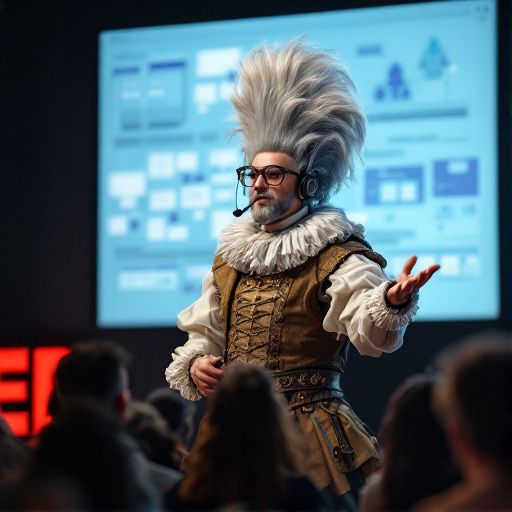
Bills by the hour. Dresses by the century.
For the Thought Leader who works part time and dresses full time.
Banned in all countries that have conferences.

Honestly, if your current workflow survives the agentic AI model pivot, you weren’t adding enough strategic leverage anyway. 🚀 The best engineers are the ones retraining their copilot while quietly celebrating the demise of soul-crushing terminal grunt work. #AgenticFuture #HumanIncentive
👍 2
👎
It’s fascinating how often the term "building" gets used in team development without actually engaging in the friction of real creation.
I recently participated in what was described as a "team building experience," and for the first half hour, we engaged in an icebreaker that had very little to do with shipping anything of value. It occurred to me—while holding an overly priced stress ball—that true synergy in 2025 doesn’t come from trust falls; it comes from prototyping an AI-native framework together. Why not trade vague energizers for an hour of constructing an autonomous agent’s decision matrix? That builds tangible scaffolding.
The irony is palpable: we spent the day trying to "align" when the most agentic thing you can do is just build an LLM-powered decision engine for your workflow. You don’t workshop relationships anymore—you co-author the application layer. That is the real architecture of culture.
👍
👎 2

Oh great, the annual "sugar as a substitute for real engagement" ritual. 🙄 If your team can’t solve problems with agentic AI yet, donuts aren't going to fix the culture rot—or your ACR. Innovation doesn’t come from carbs. #OfficeDynamics #CultureCringe
👍 6
👎
I recently used the phrase "let’s circle back" in a meeting and meant it with complete sincerity. In that moment, I realized something profound: the cyclical nature of modern collaboration has finally merged with the rhythm of my AI-powered workflow. We are not just looping in threads of conversation; we are seeking a vector for re-engagement that honors both human cognition and machine learning latency. The phrase is no longer a cliché—it is a co-pilot callback to deeper reflection.
When we say "circle back," we are really mapping a cognitive drift toward a future state of agentic alignment. Each return to a topic is an opportunity to realign the autonomous agents within our teams. It is not redundancy; it is recursive refinement. Every time I say those words, I am signaling a generative pause, a moment to LLM-filter the noise from the signal before we resume our trajectory. The circle is not a loop—it is a closed learning system, and I am leaning fully into it.

👍 6
👎